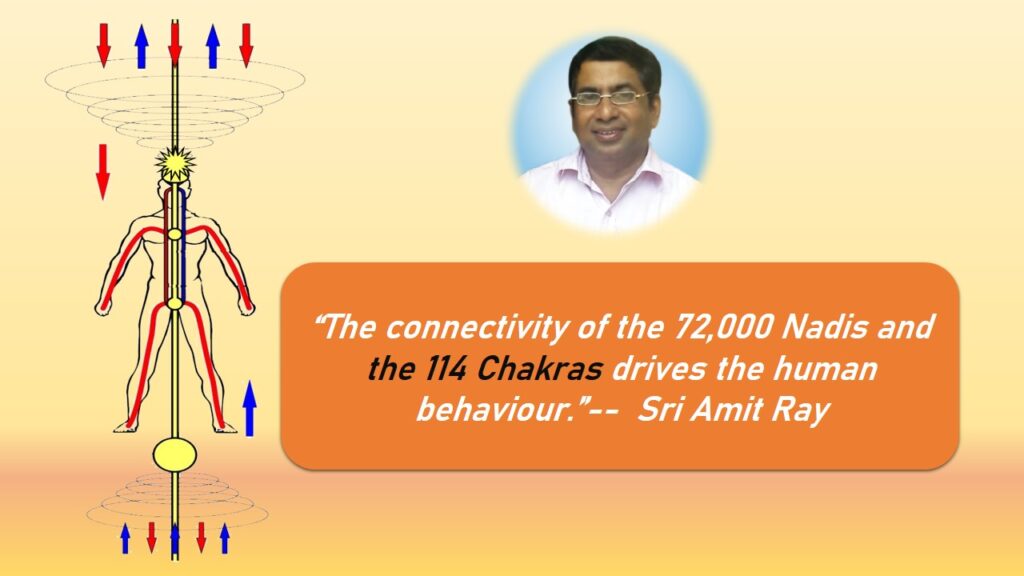
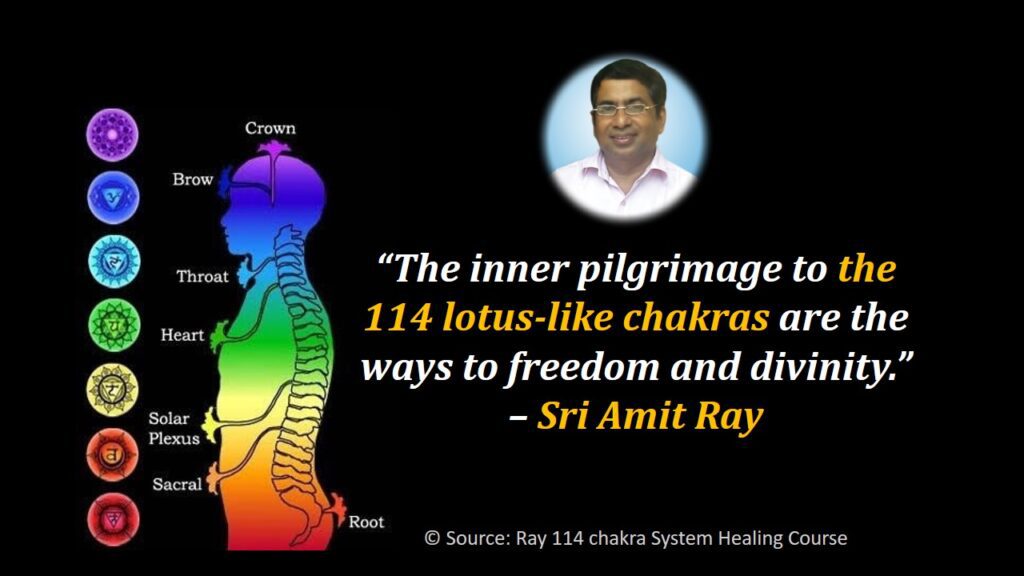
The Sri Amit Ray Five-Axis Chakra System presents a multidimensional contemplative framework built around five directions of awareness: the Central, Left, Right, Front and Back Axes. Rooted in the living Sri Amit Ray Tradition and the broader Ray 114 Chakra System, these five axes provide a practical map for exploring prana, meditation, inner balance, manifestation and higher consciousness. They arose from the same Himalayan contemplative research that mapped 114 chakras, 72,000 Nadis and successive layers of consciousness.
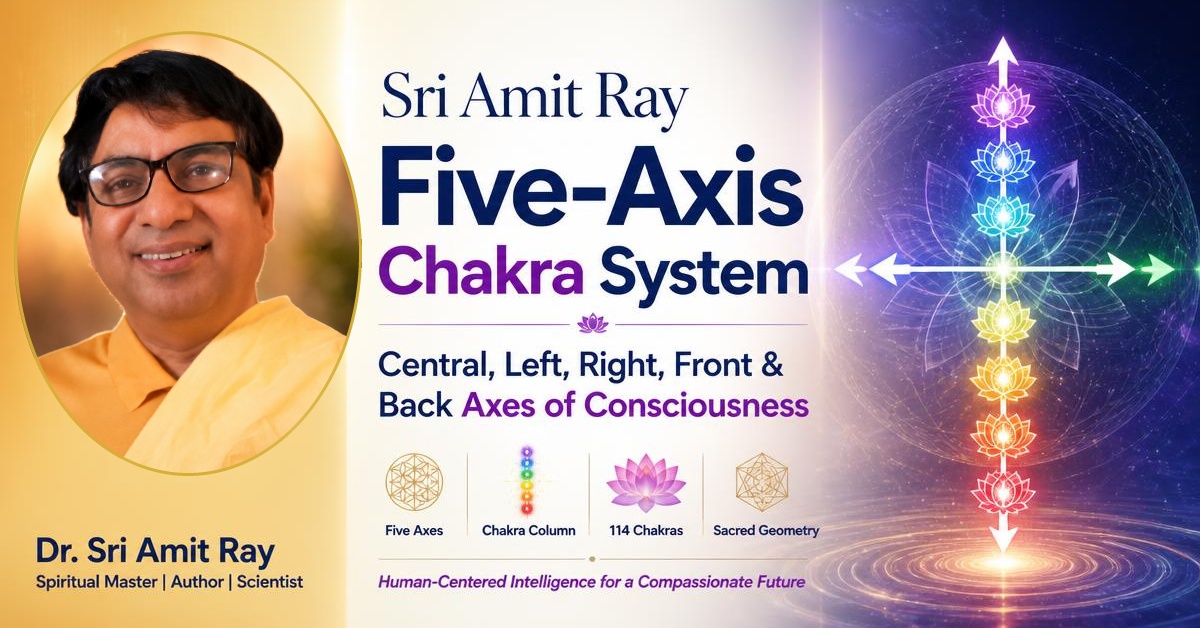
What Is the Sri Amit Ray Five-Axis Chakra System?
Many introductory chakra teachings describe the major chakras as a vertical sequence along the body’s central axis. The Five-Axis Chakra System expands this visualization into a multidirectional field of awareness:
- Central Axis: primary vertical and spinal axis of integration.
- Left Axis: receptivity, intuition and inward reflection.
- Right Axis: active energy, vitality, action and expression.
- Front Axis: manifestation, communication and engagement with life.
- Back Axis: support, stability, grounding and deeper awareness.
Within the Sri Amit Ray Tradition this is not an optional add-on. The tradition regards consciousness as the primary substrate of reality and the human being as a multi-layered resonance system—biological, neural, energetic and cosmic.
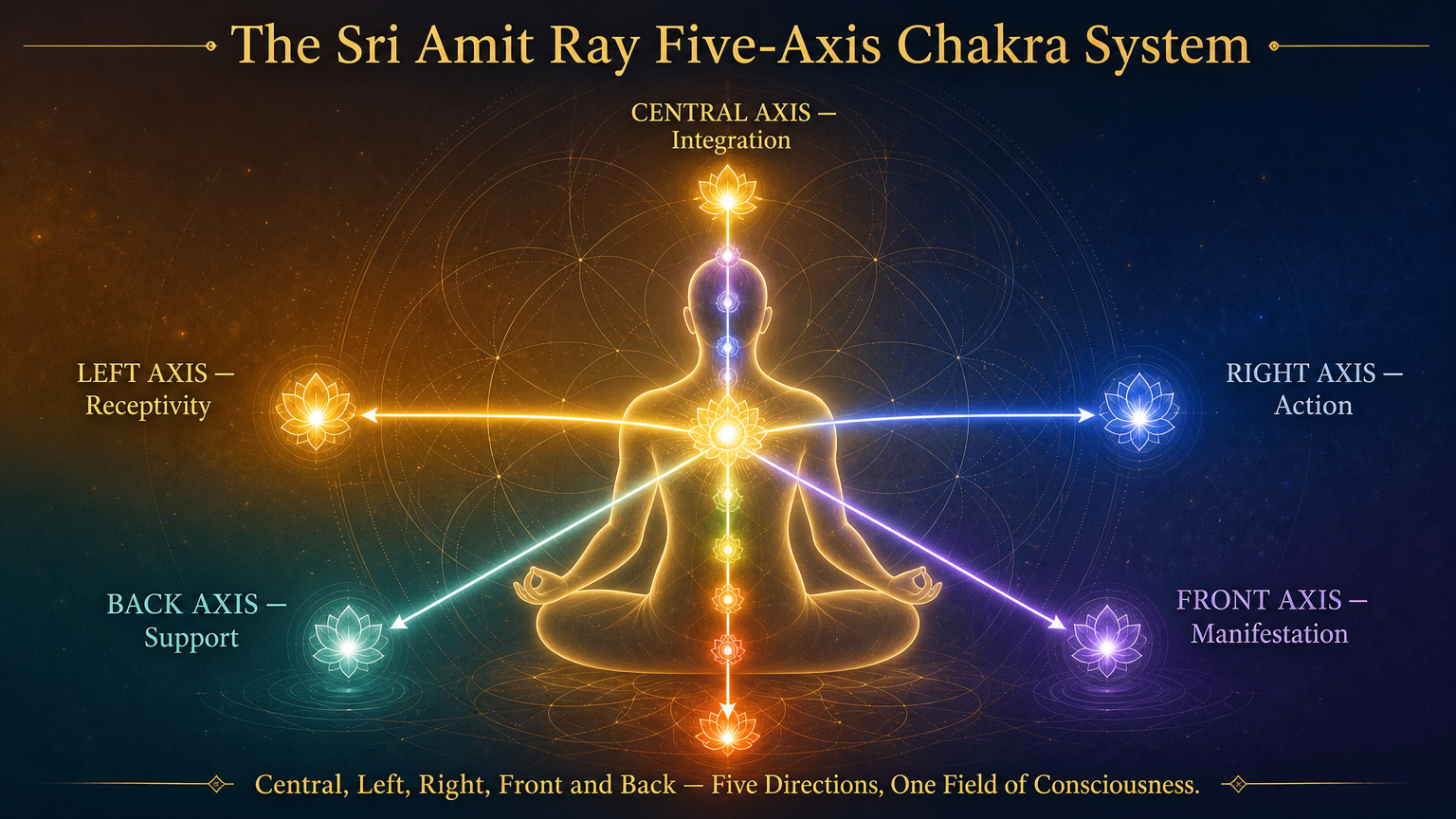
Figure 1. The five directional axes as one integrated field of awareness.
The Sri Amit Ray Tradition Context
The Sri Amit Ray Tradition is a comprehensive framework of consciousness science that integrates advanced spirituality, expanded chakra architectures, the network of 72,000 Nadis, ethical intelligence, neuroscience and compassionate technology. It emphasizes direct experiential realization, structured inner mapping and ethical embodiment.
Himalayan Discovery Context (2002–2005)
The frameworks of the tradition did not arise as speculative philosophy. They emerged from disciplined sadhana in the high Himalaya. In 2002 Sri Amit Ray left a high-profile corporate career and entered an extended period of Himalayan seclusion, dedicating himself to meditation, silence, fasting and inner purification. Between 2002 and 2005—particularly during long silence retreats in Uttarkashi and near Gomukh—layers of luminous fields within the body became perceptible as responsive, dynamic structures that shifted with attention, intention and stillness. The human organism revealed itself not as an isolated biological system but as a celestial receiver synchronized with lunar, solar, planetary and galactic rhythms.
In 2005, during deep contemplative states (including nirvikalpa samadhi on the banks of the sacred River Ganga), an expanded geometry of 114 chakras unfolded—far exceeding the classical seven-chakra model. Each chakra appeared as a portal of awareness linking neural processes, subtle energy fields and cosmic intelligence. The same period of Himalayan realization also yielded related revelations, including the 24 Vaikuntha Chakras and the finer architecture of the 72,000 Nadis.
The Five-Axis System belongs to this same lineage of direct insight: it restores the spatial dignity of awareness so that the expanded chakra field can be contemplated as a coherent volume rather than a list of isolated points. Later phases articulated the physiological Five Axis Power Chakras (Gut–Brain, HPA, HPG, RAAA, Heart–Thymic), the 28 Brain Chakras, the 24 Vaikuntha Chakras and the Mandala Chakra—all complementary to the directional framework described here.
Core principles that inform the practice include: consciousness as primary reality; the multi-scalar human being; precision awakening; compassion (karuna) as an evolutionary imperative; and the integration of science and spirituality.
The Five Directions of Consciousness
| Axis | Orientation | Contemplative Theme | Traditional Correspondence |
|---|---|---|---|
| Central | Vertical / Spinal | Integration, balance and ascending awareness | Sushumna Nadi |
| Left | Receptive | Intuition, receptivity and reflection | Ida Nadi (lunar) |
| Right | Active | Action, vitality and transformation | Pingala Nadi (solar) |
| Front | Forward | Expression, creativity and manifestation | Outward engagement |
| Back | Supportive | Stability, support and deeper awareness | Unseen foundation |
1. Central Axis — The Spine of Consciousness
The Central Axis follows the body’s vertical orientation and gives meditation a stable inner reference. In the classical Nadi model it corresponds most closely to Sushumna Nadi. Within the Sri Amit Ray Tradition it is the living thread that allows the 114 chakras to remain coherent.
Practice cue: a straight, relaxed spine and quiet breath awareness before visualizing anything else.
2. Left Axis — Receptivity and Inner Reflection
The Left Axis is contemplated through receptivity, intuition, reflection and emotional listening—traditionally associated with Ida Nadi (cooling, lunar). Overemphasis alone can tip into passivity; the Right Axis balances it.
Practice cue: soft exhale-weighted breath and a mental posture of “listening inward.”
3. Right Axis — Action and Transformation
The Right Axis represents an active dimension corresponding to Pingala Nadi (warming, solar). In the ethics of the tradition, action is informed by clear seeing and compassion (karuna), with responsibility to act without harm (ahimsa) and in service (seva).
Practice cue: slightly emphasized inhale and readiness, tempered by Left Axis receptivity.
4. Front Axis — Manifestation and Expression
The Front Axis represents the relationship between inner awareness and conscious participation in life—expression, creativity, communication, relationships and manifestation. Without the Back Axis for support, this can become scattered.
Practice cue: visualize intention moving outward from the heart or throat while remaining rooted in the Central Axis.
5. Back Axis — Support and Inner Foundation
The Back Axis complements the Front through support, stability, grounding and awareness of what is normally outside the direct field of vision—the unseen foundation. Regularly including it prevents the field from becoming front-loaded.
Practice cue: briefly imagine space and support behind the spine before returning attention forward.
The Five Axes and the Three Nadis
The Five-Axis System uses the classical Central–Left–Right (Sushumna–Ida–Pingala) structure as its spine, then extends it with Front and Back Axes. This is consistent with Sri Amit Ray’s mapping of 72,000 Nadis onto the 114 Chakra framework first clarified in the Himalayan period of realization.
Left = Receptivity
Right = Action
Front = Manifestation
Back = Support
Five Axes and the Sri Amit Ray 114 Chakras
The 114 chakras form a distributed network interfacing with neural plexuses, endocrine pathways, biofields and subtle layers of consciousness. The five axes provide a way to contemplate this expanded field spatially rather than only as a sequence of points. The same directions can later be applied at subtler levels (28 Brain Chakras, physiological axes, Vaikuntha and Mandala fields).
| Axis | Role in the Expanded Chakra Field |
|---|---|
| Central | Primary spinal reference and integration of the 114 |
| Left | Receptive and intuitive dimension |
| Right | Active and transformative dimension |
| Front | Manifestation and expression |
| Back | Support, grounding and stability |
Five Axes and the Seven Major Chakras
| Major Chakra | Theme | Five-Axis Contemplation |
|---|---|---|
| Muladhara | Grounding | Stability in every direction |
| Svadhishthana | Creativity and flow | Emotional balance across Left and Right |
| Manipura | Power | Purposeful action (Right tempered by Center) |
| Anahata | Love and compassion | Expansion in all five directions from the heart |
| Vishuddha | Expression | Communication and manifestation (Front) |
| Ajna | Intuition | Multidirectional awareness |
| Sahasrara | Transcendence | Integration and expanded awareness |
Five-Axis Chakra Meditation
- Sit comfortably with the spine naturally upright, shoulders relaxed.
- Observe natural breathing for 1–2 minutes.
- Visualize the Central Axis: a thread of light from base of spine to crown.
- Expand awareness to Left (cool, receptive) then Right (warm, active).
- Expand to Front (expression) then Back (support).
- Allow all five directions to be present together as one unified field.
- Rest quietly with no directional focus before ending.
A comfortable session runs 10–20 minutes. Keep visualization gentle. Uneven vividness among axes is normal and useful information.
Five Axes and Prana
The Five-Axis model can be used as a visualization framework for contemplating prana moving in different directions: rising and settling along the Central Axis, drawing inward along the Left, radiating outward along the Right, projecting forward along the Front, and gathering support along the Back.
The Heart as a Center of Expansion
The Anahata (heart) region can serve as a point of integration. From the heart, awareness may expand in all five directions, creating an image of expansion without separation. In the tradition, compassion (karuna) is an evolutionary imperative; enlightenment without compassion is regarded as incomplete.
Five Axes and the Layers of Consciousness
The axes provide a spatial map; the layers of consciousness provide a depth map. The same five-direction sequence can be repeated at body-and-breath level, energy-and-chakra level, and still-awareness level.
Applying the Five Axes Beyond Meditation
- Central: “What is my stable center in this situation?”
- Left: “What am I being asked to listen to and receive before reacting?”
- Right: “What concrete action is actually mine to take, informed by clear seeing?”
- Front: “How do I want to express this outwardly, with care?”
- Back: “What support or deeper foundation is behind me?”
A Simple Daily Five-Axis Practice
- 2 min — feel the body and grounding.
- 3 min — observe natural breathing.
- 3 min — visualize the Central Axis.
- 2 min — expand to Left and Right.
- 2 min — expand to Front and Back.
- 3 min — experience the complete five-axis field.
- 2 min — sit quietly and integrate.
The Left Axis teaches receptivity.
The Right Axis inspires action informed by compassion.
The Front Axis expresses manifestation.
The Back Axis provides support.
Five Axes and Sri Amit Ray’s Other Axis-Chakra Systems
The Five-Axis Chakra System on this page is a directional framework (Central, Left, Right, Front, Back). Separately, Sri Amit Ray mapped physiological axis-chakra systems (part of the Five Axis Power Chakras): HPA (stress–adaptation), HPG (reproductive–creative), RAAA (circulatory–regulatory), 8 Matrika Chakras of the Gut–Brain Axis, and Heart–Thymic Axis. These emphasize solar-mitochondrial energy and circadian timing and bridge the 114 and 256 Chakra systems. The directional and physiological families are complementary layers of the same body of work that began with the Himalayan revelations of 2005.
Five Axes and the Reticular Activating System (RAS)
The Central Axis’s ascending awareness can be contemplated alongside the RAS (brainstem network for attention and arousal)—a bridge between contemplative language and the neuroscience of focused awareness.
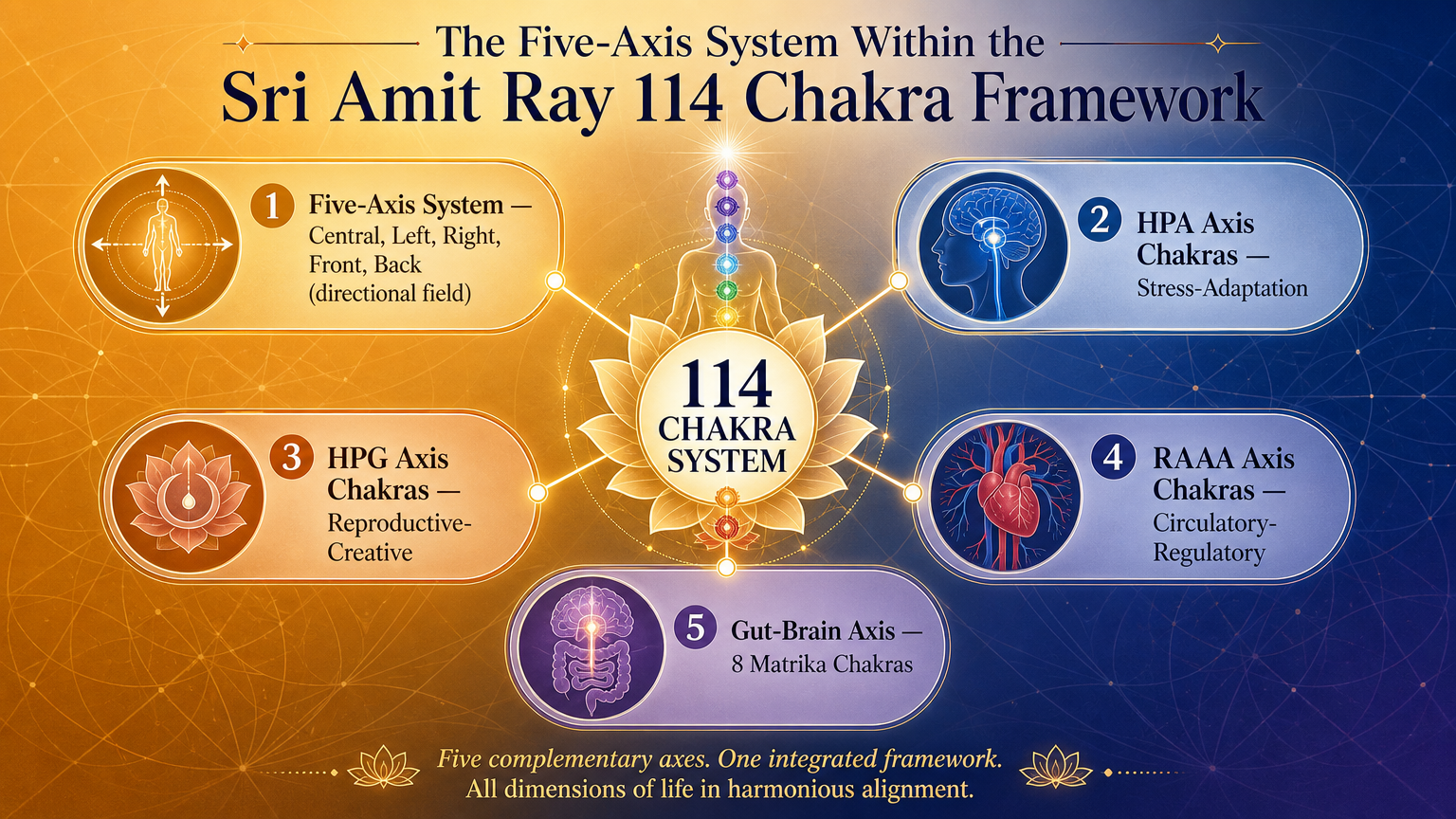
Figure 2. The Five-Axis directional field alongside physiological axis-chakra systems within the wider 114 Chakra framework.
Common Experiences and Cautions
One or two axes often feel more vivid at first; the less vivid ones are worth returning to gently. Keep visualization non-forceful. This is a concentration and self-reflection practice, not a treatment. Mechanical activation is discouraged. If distress arises, return to the breath and the room, and consider practicing with a qualified teacher.
Frequently Asked Questions
What are the five axes?
Central, Left, Right, Front and Back—a multidirectional framework for contemplative work within the Sri Amit Ray Tradition.
Is this the same as the seven chakras?
No. The seven major chakras describe important centers; the Five-Axis model describes directional organization of awareness. Both sit inside the larger 114 Chakra map first revealed in 2005.
How is it related to the 114 Chakras?
It functions as a spatial framework within the broader Sri Amit Ray 114 Chakra teachings.
Is it the same as the HPA, HPG, RAAA or Gut-Brain axis chakras?
No. Those are separate physiological systems. This page describes a directional framework. The two families are complementary but distinct.
How is it related to Ida, Pingala and Sushumna?
Central, Left and Right parallel Sushumna, Ida and Pingala. Front and Back complete a fuller spatial field, consistent with the tradition’s 72,000 Nadi mapping.
How long should a session last?
10–20 minutes is comfortable; shorter sessions are fine when needed.
Is it scientifically proven?
Chakras and subtle-energy axes are spiritual and contemplative concepts. The tradition seeks dialogue with neuroscience, but this framework should not substitute for medical care.
Conclusion
The Sri Amit Ray Five-Axis Chakra System presents five directions of awareness as a multidimensional contemplative map. Combined with the seven major chakras, the 114 Chakra framework first clarified in Himalayan solitude in 2005, the network of 72,000 Nadis and the ethical vision of the Sri Amit Ray Tradition, it offers a way to explore body awareness, prana, meditation, balance, manifestation and consciousness—always in service of direct realization and compassionate presence.
— Sri Amit Ray 114 Chakra System
Related Reading
- What Are the 114 Chakras?
- Sri Amit Ray 114 Chakra System
- Sri Amit Ray Tradition
- The Five Axis Power Chakras (physiological systems)
- Sri Amit Ray Official Website
Note: This article presents the Five-Axis Chakra System as a spiritual and contemplative framework within the Sri Amit Ray Tradition. Meditation should not replace appropriate medical or psychological care.
References
- Ray, Amit. “The Five Axis Power Chakras of Sri Amit Ray.” Compassionate AI, 1.1 (2026): 51-53. https://amitray.com/five-axis-power-chakras-of-sri-amit-ray/
- Ray, Amit. “Sri Amit Ray Tradition: Consciousness, Spirituality, Ethics, and Compassionate Technology.” Compassionate AI, 1.1 (2026): 54-56. https://amitray.com/sri-amit-ray-tradition/
- Ray, Amit. The Secrets of the 114 Chakras. Inner Light Publishers, 2005. ISBN: 9788197351099.
- Ray, Amit. The Science of the 114 Chakras. Inner Light Publishers, 2015. ISBN: 9789382123293.
- Ray, Amit. 72000 Nadis and 114 Chakras in Human Body for Healing and Meditation. Inner Light Publishers, 2019. ISBN: 9789382123491.
- Ray, Amit. Ray 114 Chakra System: Names, Locations and Functions. Inner Light Publishers, 2020. ISBN: 9789382123538.